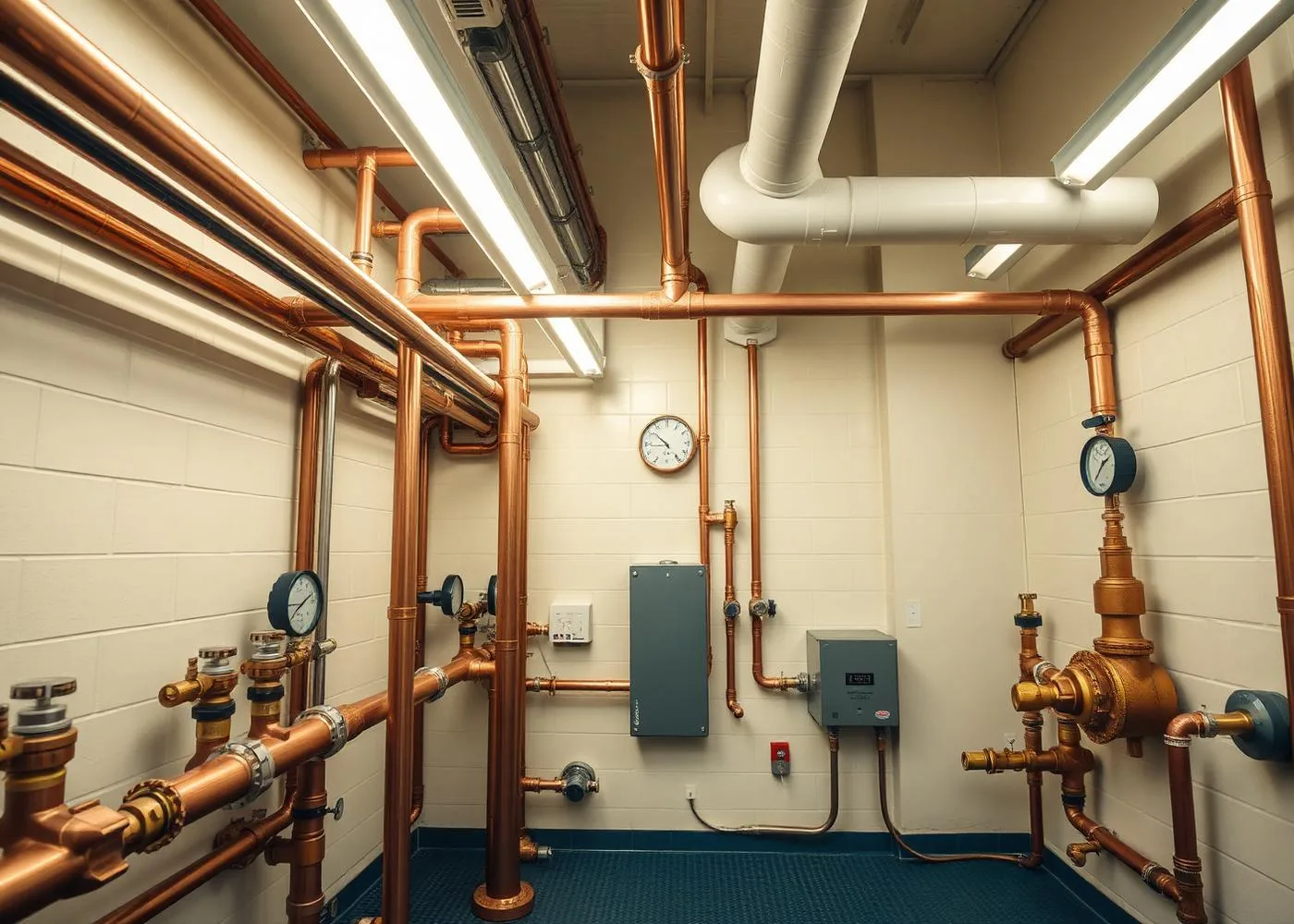
Commercial water gauges and distribution piping

Water Efficiency Technology

Water Flow Management

A practical approach to improving water-system performance and reducing metered water and sewer costs in appropriate commercial, multifamily and institutional applications.

The Opportunity

Water Costs Are More Than a Consumption Problem

Commercial buildings can experience significant water and sewer expenses, yet reducing those costs is not always as simple as asking occupants to use less water.

Flow characteristics, system pressure, metering conditions, building operations and the structure of the utility bill can all influence the opportunity.

RMEG approaches water efficiency by evaluating the building and its operating conditions first—then determining which improvements have the strongest practical and financial case.

For appropriate applications, Water Flow Management may be one of those opportunities.

How It Works

Manage the Flow Before It Becomes a Cost

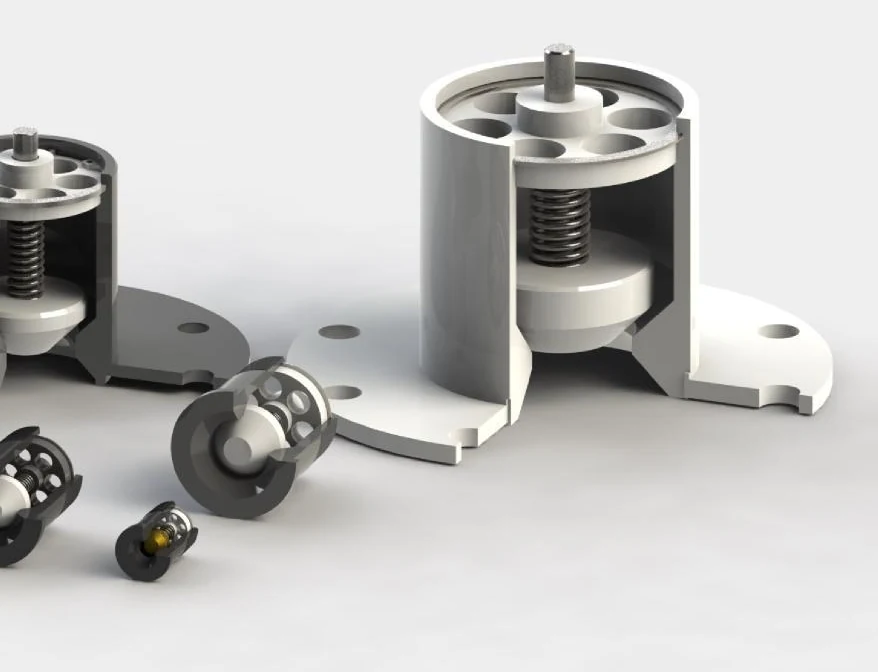
The Water Flow Management device is installed within the facility's incoming water system and is designed to influence flow dynamics, manage turbulence and address entrained air within the line.

Its internal geometry modifies the velocity profile of incoming flow. The technology is also designed to reduce perpendicular—or “swirl”—velocity within the pipe and uses an oscillation assembly intended to compress entrained air as water passes through the system.

Unlike an active mechanical system, the device uses the movement of water itself to operate.

RMEG evaluates building conditions, water use, system configuration and economics before determining whether Water Flow Management represents an appropriate efficiency opportunity.

Cutaway rendering of the Water Flow Management device showing its internal flow geometry and oscillation assembly
Cutaway view of the device's internal geometry.

The Science

Air and Flow Conditions Matter

Air within water pipelines is a recognized engineering condition. Independent pipeline research has documented multiple ways air can enter water systems and has examined its effects on flow behavior, pressure conditions and measurement.

Water Flow Management is designed to address flow conditions associated with turbulence and entrained air within appropriate building water systems.

The presence, magnitude and economic impact of these conditions vary by facility. For that reason, RMEG evaluates each application individually rather than assuming a standard savings result.

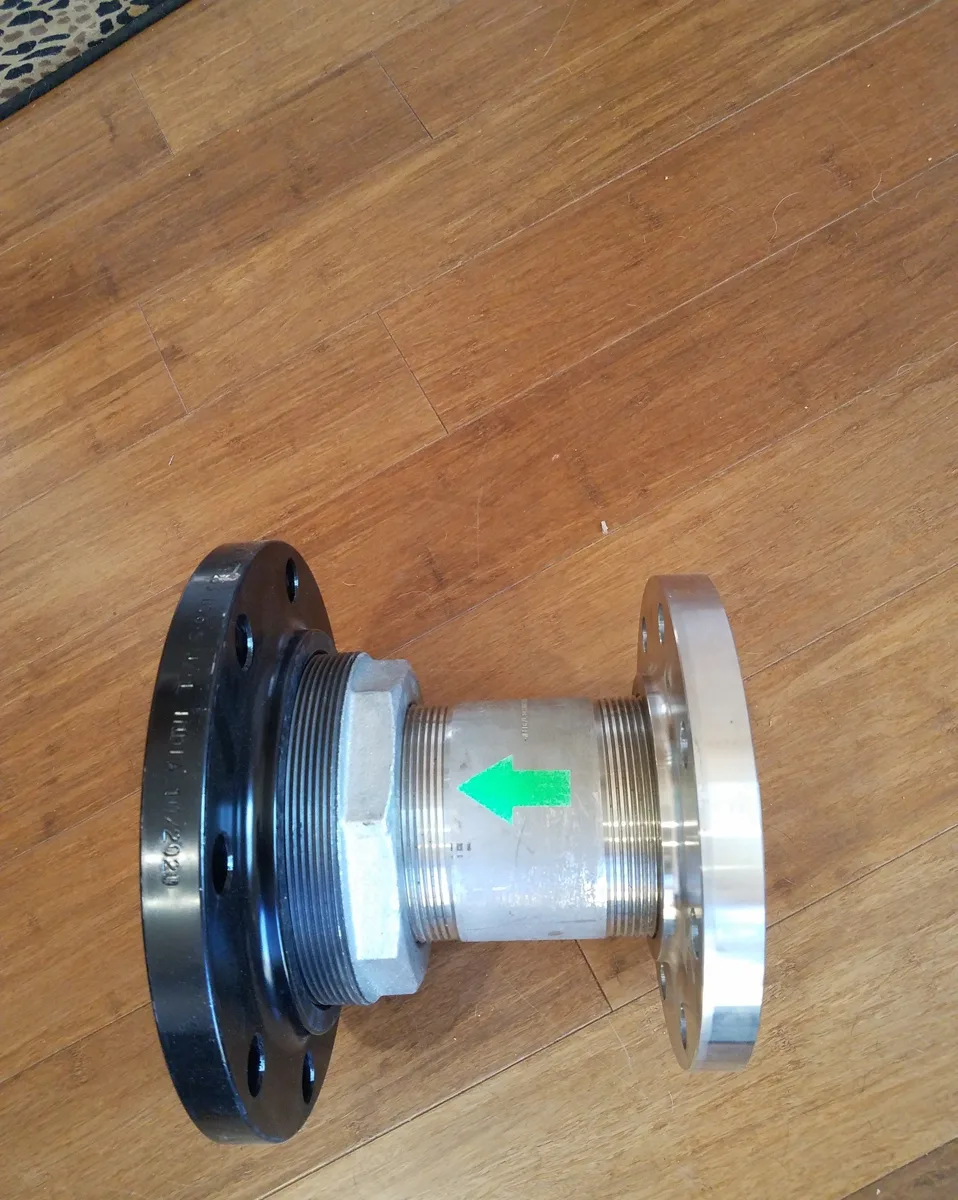
Flanged Water Flow Management device with flow-direction arrow
Flanged Water Flow Management device.

Technology should follow the building—not the other way around.

The Business Case

Evaluate the Total Utility Impact

01 — Metered Water

Potential Metered-Water Reduction

Where system conditions make the technology appropriate, Water Flow Management may reduce recorded water consumption.

02 — Water + Sewer

Consider the Entire Bill

Because sewer charges are frequently derived from incoming water consumption, improvements may affect both water and sewer expenses.

03 — Passive Operation

Designed for Simple Operation

The technology uses water flow to operate rather than relying on a separate powered operating system.

04 — Return on Investment

Measure the Economics

RMEG evaluates potential utility savings against equipment and installation costs so owners can understand the business case before moving forward.

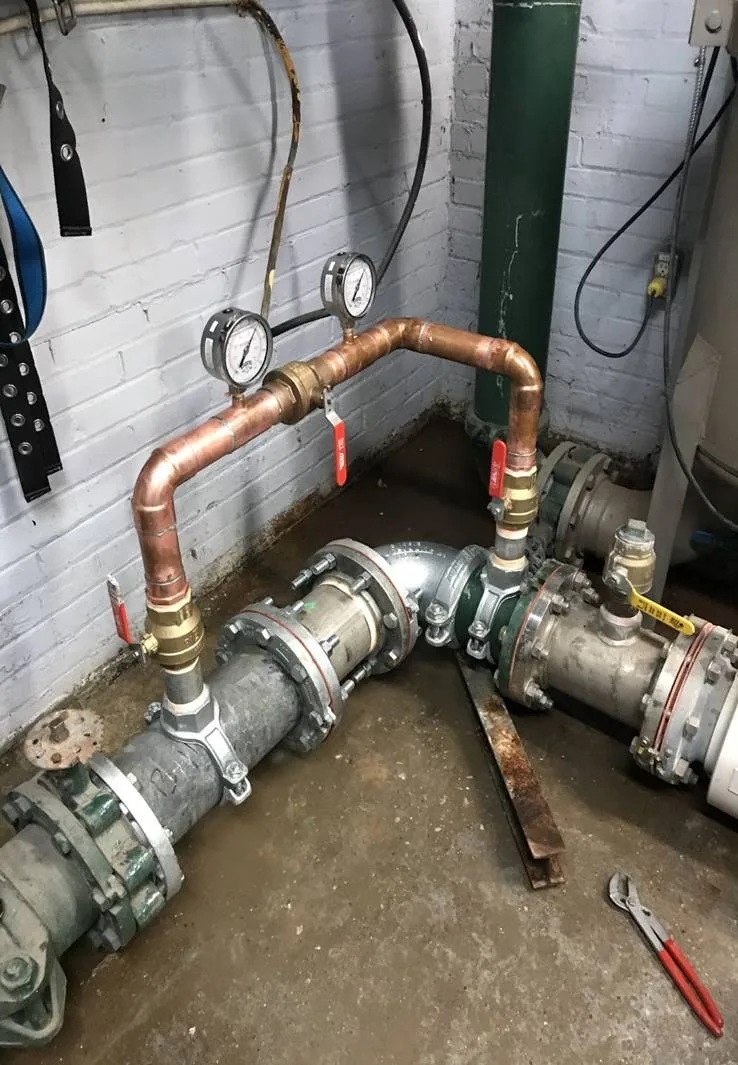
Water Flow Management device installed on a commercial building's incoming water line
Commercial installation on an incoming water line.
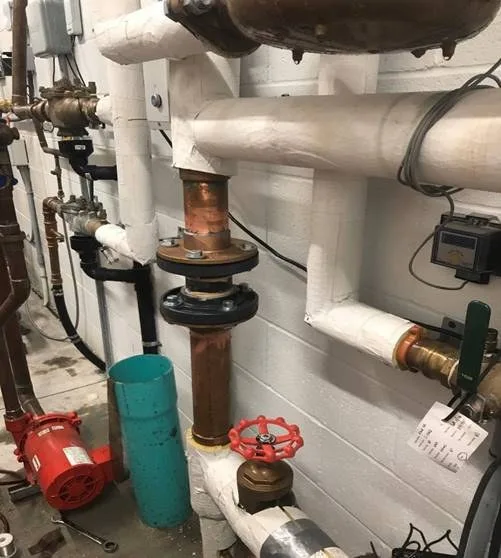
Close-up of a Water Flow Management device installed in a building mechanical room
Installation detail in a mechanical room.

Application

Integrated Into the Existing Water System

Water Flow Management is installed within the building's water infrastructure, with device sizing and configuration dependent on the application and system conditions. Potential applications can include:

  • Commercial buildings
  • Multifamily and condominium communities
  • Hospitality
  • Educational facilities
  • Institutional facilities
  • Manufacturing and food production
  • Irrigation systems
  • Other high-water-use facilities

Installation requirements and expected performance should be evaluated for each property.

Documented Results

Measured in the Field

Water Flow Management performance varies by building, system and application. The following examples summarize results contained in historical field reports and customer documentation supplied to RMEG.

Case 01 · Multifamily / HOA

Pier 33 Condominiums

19%+

reported reduction in initial meter measurements

The condominium association subsequently reported water and sewer savings exceeding $3,000 per month and a device payback of less than two months.

The customer also reported no noticeable change in water pressure.

Pier 33 Condominiums
Mooresville, North Carolina

Case 02 · Multifamily / HOA

Managed Residential Community

21.43%

reported water-bill savings over six months

A 204-home community managed by PS Property Management reported average monthly water bills declining from approximately $21,500 to $17,000 after installation.

The customer reported more than $20,000 in savings during the first six months and approximately a four-month payback on the investment.

PS Property Management
Texas

Case 03 · Commercial / Irrigation

Duke Energy Facility

22.73%

difference measured during the documented controlled test

A field engineering report compared a 15-minute irrigation-system test before and after installation. The report recorded, for the stated test conditions:

  • 81.4 gallons — pre-installation
  • 62.9 gallons — post-installation

Duke Energy Building
Charlotte, North Carolina

Results are application-specific. Actual savings and payback vary based on water use, system conditions, application, utility rates and sewer-billing structure. Historical case results are not guarantees of future performance.

Application Experience

Across Different Types of Facilities

Historical Water Flow Management documentation includes applications across multifamily housing, education, hospitality, recreation, manufacturing, food production, commercial facilities and other high-water-use environments.

Additional supplied field documentation includes reported results from schools, YMCA facilities, apartment communities, hostels, manufacturing operations and other commercial applications.

RMEG Approach

Assess First. Invest Second.

The question isn't simply whether a technology can work. The question is whether it makes sense for your building.

  1. 01

    Assess

    Review facility water use, utility costs, system configuration and operating conditions.

  2. 02

    Identify

    Determine whether Water Flow Management or another water-efficiency strategy warrants further evaluation.

  3. 03

    Quantify

    Evaluate potential savings, installation requirements, utility economics and projected return.

  4. 04

    Implement + Measure

    Where the business case supports action, coordinate implementation and evaluate performance against established conditions.

Efficiency Matters

Reducing Commercial Water Costs: Where Building Owners Should Look First

Water efficiency starts with understanding where consumption occurs, what the utility bill is actually telling you and which improvements can produce measurable operational value.

Related Solution

Explore Water Efficiency

Water Flow Management is one component of a broader water-efficiency strategy that can include usage analysis, system evaluation, leak identification, submetering and other conservation opportunities.

Start With the Building

Could Water Flow Management Make Sense for Your Facility?

RMEG can evaluate your water use, system conditions and utility economics to help determine whether Water Flow Management—or another water-efficiency strategy—warrants consideration.